|
Exam of the Vagina and Cervix
A disposable speculum can be used to examine the vagina and cervix for poor conformation, infections, injuries, persistent hymen, varicose veins, adhesions and cervical injuries. The procedure is described below and in a video.
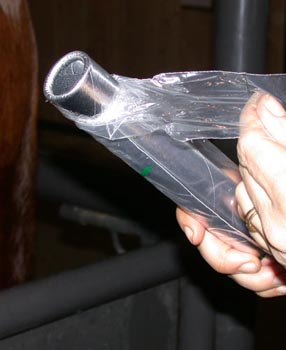 |
- Carefully open the end of the speculum with the rounded end. Place a quarter-sized drop of lubricant on the end of the speculum.
|
|
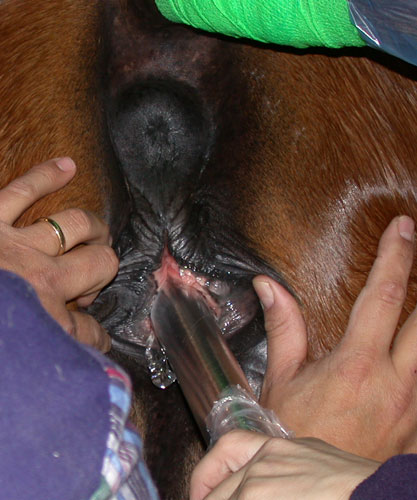 |
- Open the lips of the vulva so that the speculum can be placed in the vagina. Rotate the speculum as it is pushed into the vagina so that the lubricant is spread evenly.
|
|
 |
 |
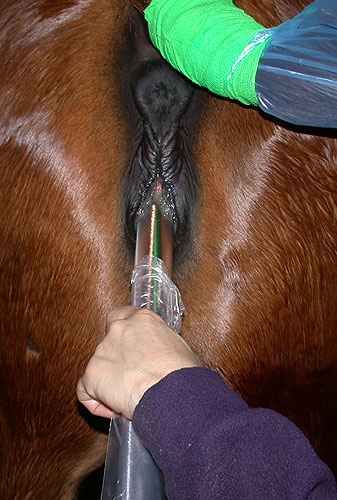
- Apply steady pressure with the speculum pushing up toward the backbone, this will get the speculum over the vulvo-vaginal sphincter. If the speculum enters the urethra, the mare will be VERY UNCOMFORTABLE (may urinate, kick, etc) and the speculum will not move forward. Pull the speculum backwards and angle the speculum upwards toward the backbone. Using a flashlight, move the speculum so you can observe the vagina / cervix.
|
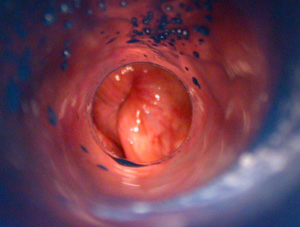
View of cervix through speculum. This is healthy, diestrual cervix.
|
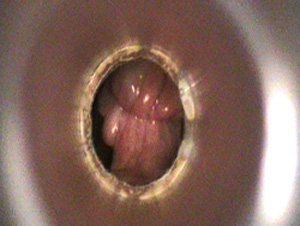
View of cervix through speculum. This is healthy, estrual cervix.
|
The cervix reflects the presence of progesterone:
- If progesterone is high, such as in pregnancy or diestrus, it is long, firm and tubular.
- diestrous: pale, dry, and closed (projecting out from the middle of the anterior vagina), often referred to as "high, white, and tight".
- pregnancy: pale, tightly closed and covered with a sticky blue-gray mucus.
- When progesterone is low, such as in estrus or anestrus, it becomes softer, flatter and shorter.
- estrus: pink (estrogen enhances the blood supply), edematous, relaxed (lying on the vaginal floor near ovulation), and moist
- anestrus: very pale, flaccid, and may be open allowing you to see into the uterus.
|
|
|


