
Body Condition and Reproduction
Body condition scoring is based on the amount of fat stored at six specific areas of the body (Henneke Body Condition Scoring). The body fat is determined by observation and palpation and evaluates body condition not conformation (9 categories: 1-poor to 9- extremely fat). However, conformation differences (prominent withers, flat loin, weak topline, injuries) or physiological differences (breed, pregnancy, age) may influence an emphasis placed on an area.
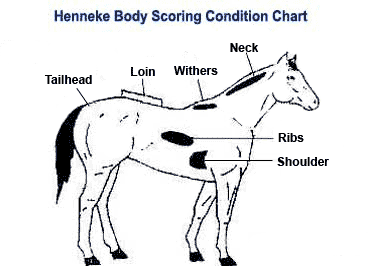
(Diagram from: Evans, P. 2005. Body Condition Scoring: A Management Tool for Evaluating All Horses. Utah State University Extension Bulletin AG/Equine/2005-01.
)
Why is body condition important to reproductive efficiency?
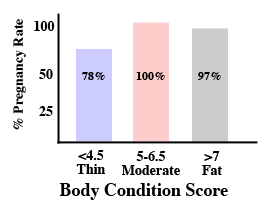
Experiments at Texas A&M University studied the influence of body condition at foaling on rebreeding efficiency. Mares were classified as thin, moderate or fat at foaling and breeding. These studies indicate that the body condition of a mare is important in reproductive efficiency. Mares in better body condition are more likely to get pregnant in fewer cycles. (Henneke, D.R., G.D.Potter and T.L. Kreider. 1984. Body condition during pregnancy and lactation and reproductive efficiency of mares. Theriogenology 21:897.)
 |
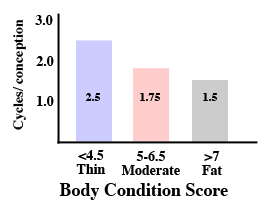 |
The graphs above show that open mares, maiden mares and foaling mares that enter the breeding season in moderate or higher body condition have a higher reproductive efficiency than mares in thin condition. Mares in thin condition have a lower overall pregnancy rate and takes more cycles to conceive. Further observations include:
- Mares foaling in thin condition were less likely to rebreed even when fed enough to meet lactation requirements.
- Increasing the energy fed to thin mares during lactation improves rebreeding efficiency but also increases risk of colic or founder and was expensive.
- Mares foaling in fat condition used the stored body fat for lactation and high reproductive efficiency of rebreeding. These mares do not have more foaling problems than moderate or thin mares.
- Increasing body condition above the moderate range before the breeding season did not impair rebreeding in mares unless the mares were losing weight during the breeding season.
- Obese mares (8.5-9) have physiological disorders (abnormal endocrine function) that affect reproductive function.

