
Control of Ovulation
Induction of ovulation at a precise time may be an advantage for the following reasons:
- ensure ovulation occurs within 36-48 h of mating to stallions with normal fertility and thus prevent rebreeding
- appointment servicing for mares transported to stallions
- ensure a single insemination for a problem broodmare
- ensure ovulation close to the time of artificial insemination of cooled transported or frozen semen or for mares mated to stallions with low fertility associated with poor sperm longevity
- separate inseminations when many mares are presented in estrus at the same time.
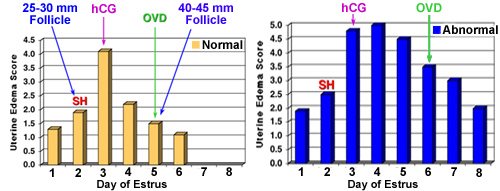
A LH-like hormone, hCG (human chorionic gonadotropin), is used to cause ovulation (2500 to 3000 IU, $4.00/dose wholesale). The graphs below show when HCG should be given. The graphs are based on uterine edema (fluid in the uterine tissue, increasing score is increasing edema) as assessed by ultrasound, the day of standing heat begins (SH), follicular size and the day of ovulation (OVD). To be effective, the mare must have a >35 mm follicle and good uterine edema (usually day 3 or 4). The time from hCG injection to ovulation is 36 - 44 hours if these conditions are present as shown in a normal cycle. Mares should be bred with fresh or cooled semen 24 hours after hCG injection. With cooled semen, a mare may be rebred at 36-40 hours if ovulation has not yet occured, but this is not required. In the abnormal cycle in blue, uterine edema did not subside and ovulation was delayed. This type of a mare rarely becomes pregnant in this cycle.
On Kentucky Thoroughbred farms, mares are often treated after breeding with hCG to ensure ovulation occurs and the mare does not need to be brought back for another breeding in that cycle.

