Parasite Control
 |
 |
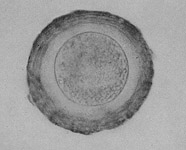 |
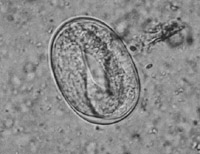
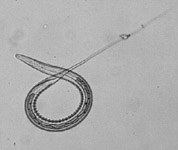
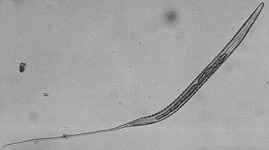
Strongyles equii larva Large strongyles |
trichonema larva Small strongyles |
Parascaris equorum |
Internal parasites remain one of the largest health threat to the horse. The broodmare should be on a regular deworming program prior to and during pregnancy. The program should take into account the age of the mare, number and age of other horses on the farm, the stocking rate in the pasture, pasture management and season.
Deworming the mare with Ivermectin within 12 hours after foaling has been found to help with foal diarrhea during the mare's 1st heat cycle (threadworms, Strongyloides westeri infection). Foals may acquire threadworms through larvae present in the mare's milk, larvae penetrating the skin or by ingestion. Threadworm larvae are found in mare's milk from 4 to 40 days after foaling. Foals may become severely infected by two to three weeks of age, exhibiting diarrhea, indigestion, and unthriftiness.
|
|