Cryoprotectants
In the following discussion, a solute refers to a molecule or compound that is dissolved in a solution. For example glycerol in the freezing extender is a solute. Glucose is added to extenders and since it is dissolved in the liquid extender is also a solute. Solutes contribute to the osmotic pressure of a solution.
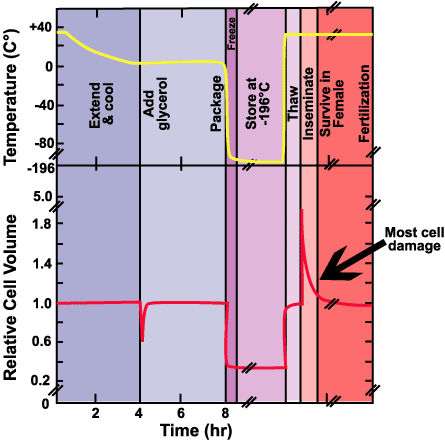
The diagram below shows what happens to the size of a sperm as the cryopreservation process occurs. As the temperature is cooled to 5°C, there is no change in size until glycerol is added. As glycerol is a solute, the osmotic pressure of the extender with glycerol is higher than the one without glycerol that was used to cool the semen or the intracellular fluid within sperm. As such, there is a momentary dehydration of the sperm upon glycerol addition. When a solution is frozen, it does not really freeze solid as it appears. Rather, some of the water is frozen but some of the water remains liquid with solutes increasing in concentration as the pure water is gradually frozen to ice. The unfrozen portion which the sperm are forced into then has a higher osmotic pressure than what is present in the fluid inside the sperm. The sperm thus respond, become dehydrated as water leaves them, and shrink in size. Eventually all water is frozen solid and the size of sperm does not change further. Upon thawing however, the ice melts creating a solution of pure water that is very low in osmotic pressure. The cryoprotectant becomes redisolved in this water and so keeps the osmotic pressure from being too low. The water however responds to the osmotic pressure difference with the sperm and goes into the sperm. The sperm swell rapidly but swelling is limited because large amounts of the cryoprotectant are still present within and in the extender that is now thawed. When the sperm are then inseminated, sperm become suspended in female reproductive tract solutions (this has no cryoprotectant). The intracellular liquid within sperm however has the cryoprotectant still present. Since water can diffuse in faster than the cryoprotectant can leave, the sperm swell rapidly. It is during the thawing and dilution in female reproductive tract fluid or more extender that most damage to sperm occurs. It is the rapid response to osmotic changes and inability of the sperm membranes to cope with changing volumes that kills most of the sperm that die. In general, more than 50 % of the sperm alive before freezing die during the freezing and thawing process.